Skip to content

Color Inspiration 2026:
12 Unique Palettes Built Around Pantone’s Color of the Year

-
Using a single shade as a creative anchor to explore emotion, accessibility, and style through color

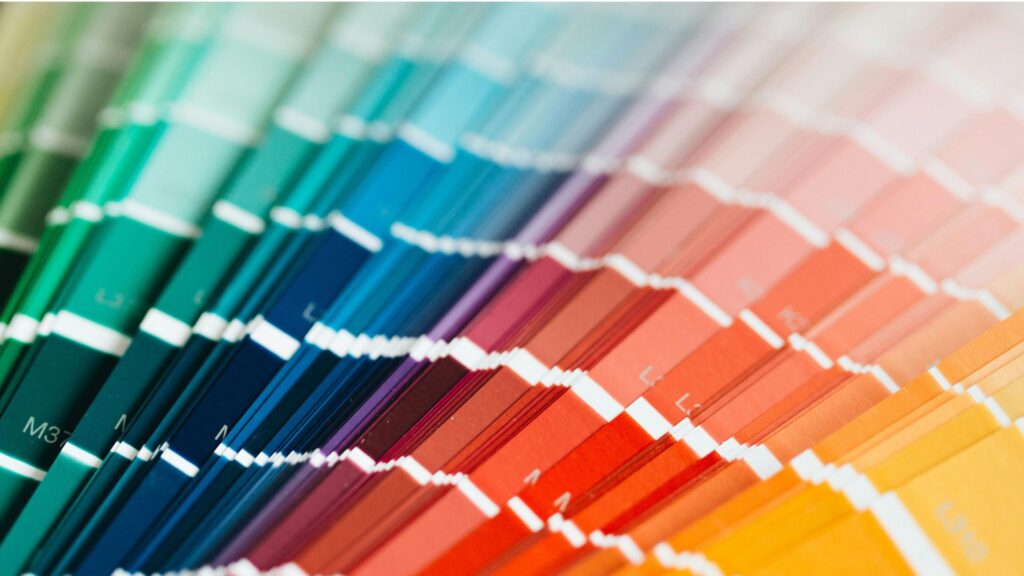
Colour fan showing different tints and hues of colors for creative inspiration.

Let’s say it out loud: color is powerful.
Color can set a mood, draw your eye, and stir up emotions before you even register what an artwork is about. For me, color often comes first, sometimes even before a sketch hits the page. And once the design is done, color is usually where I find the most joy in refining, playing, and tweaking. I don’t claim to be any good, my main goal with color is to have fun. 
In this post, I’m sharing how I approached color inspiration in 2026 using Pantone’s Color of the Year, reflections from other artists, and some simple color theory. Along the way, you’ll find 12 hand-crafted color palettes, all accessible, all editable, and all built to spark your next creative project.

The Emotional Role of Color in Art

Color isn’t just a finishing touch, it’s part of the whole story.
Warm tones can bring comfort or energy, while cool tones often offer calm, space, or introspection. A single tweak in hue or saturation can completely shift the emotion of your work. Because of this, color deserves just as much intention as layout, composition, or subject matter.

Take a look below at how two of my designs look completely different just by using different color palettes. The first one is the original colorway, and the one next to it is a variation—the recolored version of the same pattern design.

For the recoloring, I used two of the color palettes I’m sharing in this post (further below), and I had so much fun. Don’t you agree that the overall look and mood have completely changed?

Decorative, modern spring pattern Design Tulip by Kathrin Woo Design, original colorway.

Original colorway

Decorative, modern spring pattern Design Tulip by Kathrin Woo Design in a color variation.

Recolored using color palette 05/2026

Playful and cute surface pattern design Butterfly and Flower by Kathrin Woo Design, original colorway.

Original colorway

Playful and cute surface pattern design Butterfly and Flower by Kathrin Woo Design in a color variation.

Recolored using color palette 07/2026

Where I Find Color Inspiration

Nature is always inspiring, yes. But more often, I find myself drawn to color combinations in other people’s work, palettes that feel right. Over the years, I’ve also started building my own “visual color library” from pieces I’ve created and loved. This kind of intentional collecting makes future creative work feel like coming home, remixing tones I know I connect with. 
However, I wouldn’t suggest limiting yourself to using the same colors again and again—unless that’s your intent. Stay open and continue experimenting.

And just to note: While it’s never okay to copy someone’s work (unless it’s strictly personal or educational), colors themselves can’t be copyrighted. The goal is to let what inspires you build your style, not take from someone else’s.

Working with Pantone’s Color of the Year

When creating the 2026 color palettes shared in this post, I used Pantone’s Color of the Year: Cloud Dancer as a creative starting point. While Pantone doesn’t provide official hex codes, Cloud Dancer is often translated digitally as #F0EEE9 –a soft neutral that brings calm and quiet structure.

By using Cloud Dancer as the first color in each palette, I was able to build 12 combinations that explore everything from bold energy to soft elegance, without ever losing that grounded, versatile base.

A Quick Refresher on Color Theory

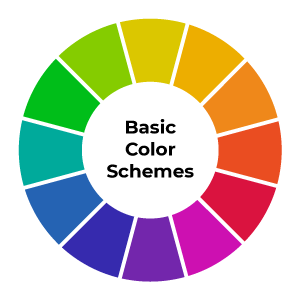
The six most common color schemes—monochromatic, analogous, complementary, split-complementary, triadic, and tetradic—provide different ways to combine colors, balancing harmony and contrast to create visually appealing designs. Let’s have a closer look:

  • Monochromatic: Tints, shades, and tones of a single hue. 
  • Analogous: Three or more hues that are next to each other on the color wheel.
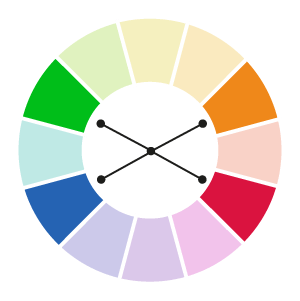
  • Complementary: Two hues that lie across from each other on the color wheel.
  • Split-Complementary: One hue in combination with two nearby opposites (💛 my favorite).
  • Triadic: A group of three hues spaced evenly on the color wheel.
  • Tetradic: A group of four hues spaced evenly on the color wheel. Two complementary pairs.
Color Wheel to Explain Color Theory, Color Schemes and share color inspiration for Artists and Designers as a resource.
Monochromatic
Color Wheel to visually explaining color theory. Monochromatic color scheme for color palette inspiration for Artists and Designers as a resource.

Tints, shades, and tones of a single hue.

Analogous
Color Wheel to visually explaining color theory. Analogous color scheme for color palette inspiration for Artists and Designers as a resource.

Three or more hues that are next to each other on the color wheel.

Complementary
Color Wheel to visually explaining color theory. Complementary color scheme for color palette inspiration for Artists and Designers as a resource.

Two hues that lie across from each other on the color wheel.

Split-Complementary
Color Wheel to visually explaining color theory. Split-complementary color scheme for color palette inspiration for Artists and Designers as a resource.

One hue in combination with two nearby opposites.

Triadic
Color Wheel to visually explaining color theory. Triadic color scheme for color palette inspiration for Artists and Designers as a resource.

A group of three hues spaced evenly on the color wheel.

Tetradic
Color Wheel to visually explaining color theory. Tetradic color scheme for color palette inspiration for Artists and Designers as a resource.

A group of four hues spaced evenly on the color wheel.

12 Unique Color Palettes

Now that we’ve explored the basic color schemes and how colors can interact on the wheel, it’s time to see them in action.

I’ve put together 12 unique color palettes—each inspired by different moods, ideas, and experiments with color harmony. These palettes show how the principles we just discussed can come to life in real combinations, offering a starting point for your own creative explorations:

All of these palettes start with Cloud Dancer (#F0EEE9) and build from there. Some are soft, some are vibrant, but all are versatile. Each palette has been tested for contrast and accessibility. Feel free to tweak, make them your own, and pin them to your Pinterest.

Color palette 1/2026 with calming blues and a golden-orange accent, an elegant complementary palette for balanced and uplifting creative inspiration.

Calming blues with a golden-orange pop—an elegant complementary palette that balances tranquility with vibrant energy.

Color palette 2/2026 with playful pinks and oranges and a fresh green accent, an energetic palette for bold and playful creative inspiration.

Playful pinks and oranges with a fresh green twist—an energetic palette blending analogous warmth with complementary contrast, though not a strict scheme.

Color palette 3/2026 with bold reds, pinks, and oranges with teal and warm yellow, a lively split-complementary palette for vibrant creative inspiration.

Bold reds, pinks, and oranges with teal and warm yellow—a lively split-complementary palette blending analogous warmth with a contrasting accent.

Color palette 4/2026 with warm yellows, oranges, pinks, and reds, an analogous palette with rich, harmonious tones for creative inspiration.

Warm yellows, oranges, pinks, and reds—an energetic analogous palette with rich, harmonious tones.

Color palette 5/2026 with soft pinks and green with violet accents, a complementary palette with balanced contrast and creative inspiration.

Soft pinks and green with violet accents that stand out—a complementary palette with balanced contrast and visual interest.

Color palette 6/2026 with soft blue and warm oranges with golden accents, a complementary palette balancing calm cool tones with vibrant warm energy for creative inspiration.

Soft blue and warm oranges with golden accents—a complementary palette with warm analogous tones, balancing cool calm with vibrant energy.

Color palette 7/2026 with golden yellow, teal, and purple with soft pastels, a lively triadic palette for balanced contrast and creative color inspiration.

Golden yellow, teal, and purple with soft pastels—a lively triadic palette full of balanced contrast and harmony.

Color palette 8/2026 with soft pinks, deep purple, and warm oranges with golden accents, an energetic analogous palette for bold creative inspiration and expressive color ideas.

Soft pinks, deep purple, and warm oranges with golden accents—an energetic analogous palette with harmonious, warm tones.

Color palette 9/2026 with warm golds, oranges, and browns on a neutral base, an analogous palette of earthy, harmonious tones for creative inspiration.

Warm golds, oranges, and browns with a neutral base—a rich analogous palette full of earthy, harmonious tones.

Color palette 10/2026 from soft pinks to deep magenta with a neutral base, a monochromatic palette for creative inspiration.

Soft pinks to deep magenta with a neutral base—a striking monochromatic palette with rich, harmonious variations.

Color palette 11/2026 with warm oranges, pinks, and reds balanced by a deep blue accent and soft neutrals for bold color inspiration.

Warm oranges, pinks, and reds with a deep blue accent and soft neutrals—an energetic analogous palette with a striking contrasting pop.

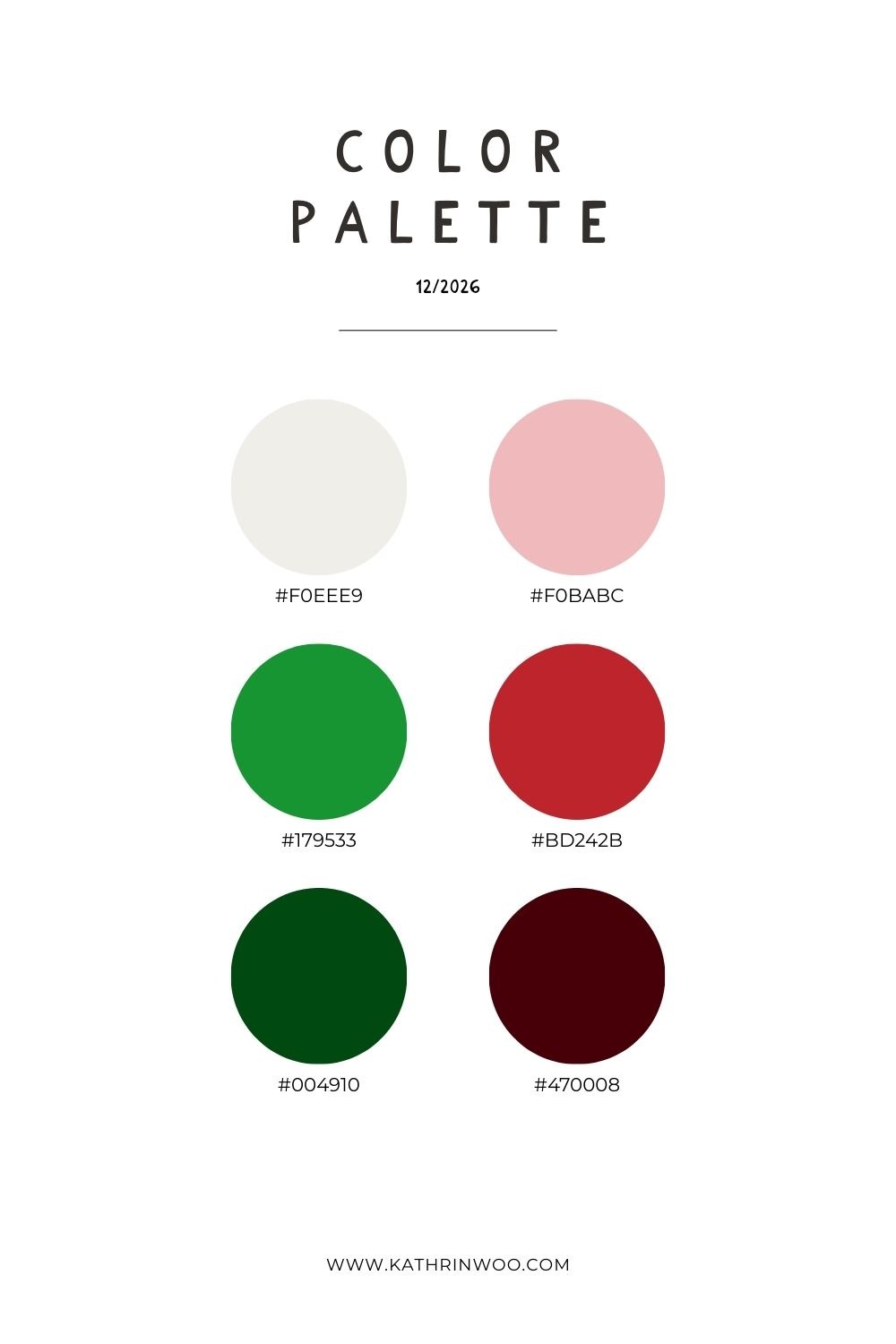
Color palette 12/2026 with rich reds, pinks, and deep greens on a neutral base for creative inspiration.

Rich reds and pinks contrasted with deep greens and a neutral base—a striking complementary palette with balanced warmth and coolness.

Color Is a Journey

Just like your style, your relationship with color will evolve—you’ll try new things, surprise yourself, and return to old favorites with fresh eyes. This process of color play—remixing, testing, and refining—is part of what keeps creativity alive.

When I started my creative career, my color choices tended toward softer, pastel shades. Over time, I’ve found myself leaning toward brighter, more vibrant colors.

Whether you’re exploring a fresh palette for your next pattern collection or just color-doodling in Procreate, I hope this post helps you feel inspired and a little more confident in your creative decisions. Just have some fun with colors!

If you’d like more resources like this, subscribe to my newsletter or pin this post and images to come back later when you’re color-hunting again.

Happy color experimenting!

Kathrin
___

Connect & follow here:

Instagram:
Kathrin Woo Design 
Create & Live

Leave a Reply

Your email address will not be published. Required fields are marked *